
Chitwan National Park (CNP) (170 km from Kathmandu) is Nepal’s first national park and a famous wildlife conservation area. The park has 952 square kilometers of tropical forest , grassland, rivers and lakes making it perfect for wildlife and bird watching. The surrounding buffer zone supports community development and conservation. It is a home to many rare and protected animals, including:
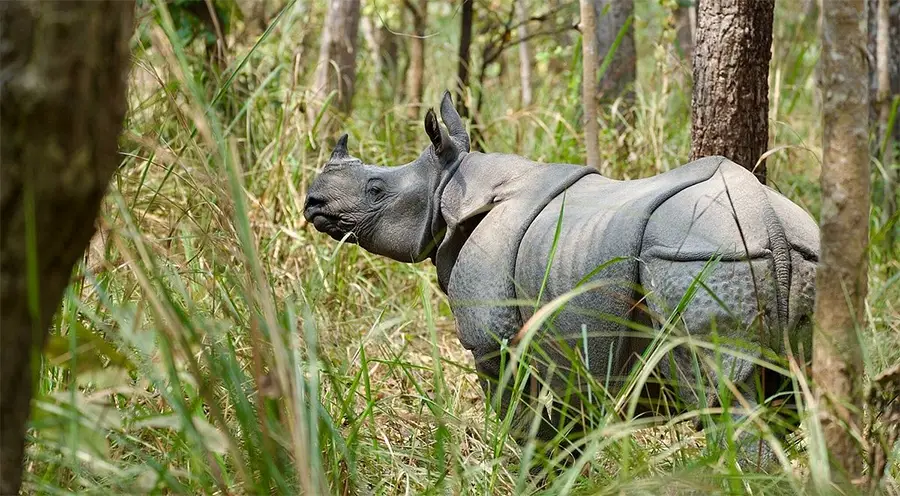
- One - horned rhinoceros
- Bengol tigers
- Asian elephant
- Gharial crocodile
- Over 544 species of birds
Location & Size:
- Established: 1973
- Area: 952.63 sq.km. (Park) + 729.37 sq.km. (Buffer Zone)
- Location: South-central Nepal, in Chitwan, Makawanpur, Parsa, and Nawalparasi districts
- Altitude: 110–850 m above sea level
- UNESCO World Heritage Site: 1984
Climate:
- Best time to visit: October–February (pleasant 25°C)
- Hot season: March–June (up to 43°C)
- Monsoon: Late June–September (heavy rainfall, 2150 mm/year)
- Bird watching: September–November and February–April
- Winter flowers: Palash (flame of the forest) and silk cotton trees
Habitats:
- Sal forest (70%), riverine forest, grasslands, and Chir pine hills
- Grasslands have over 50 types of grasses, including elephant grass up to 8 meters high
Wildlife & Birds:
- Mammals: 68 species (including One-horned Rhinoceros, Royal Bengal Tiger, Wild Elephant, and Pygmy Shrew)
- Reptiles & Fish: 56 species of herpeto fauna, 126 species of fish
- Birds: 544 species, including 22 globally threatened like Bengal Florican, Slender-billed Vulture, White-rumped Vulture, and Red-headed Vulture
- Famous for wildlife safaris
Activities:
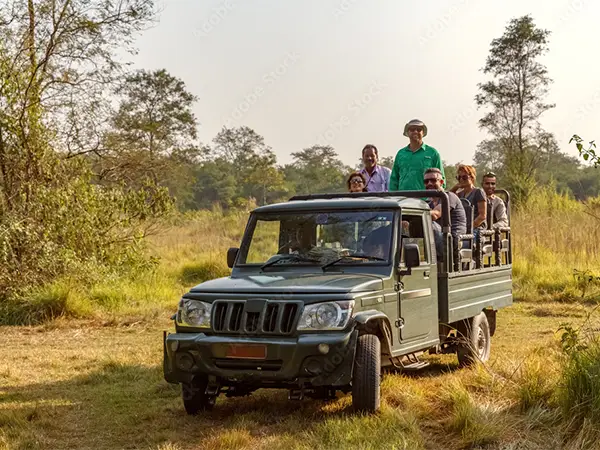
- Jeep safari and canoe rides in Rapti rivers
- Bird watching and photography tour
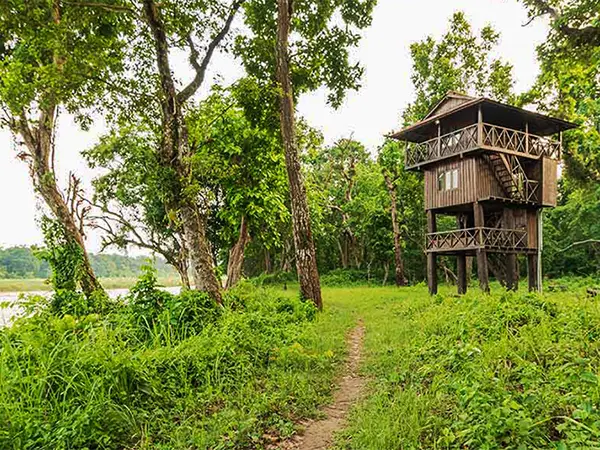
- Tower Night stay inside National Park
- Community visits in buffer zone areas
- Elephant safari and breeding center
- Tharu culture dance and village tours