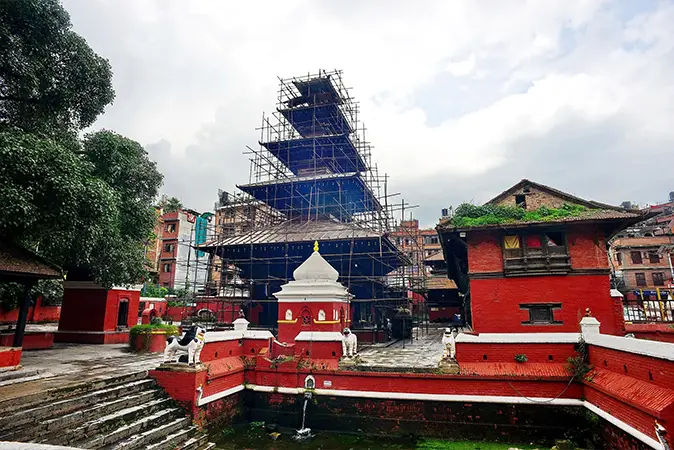
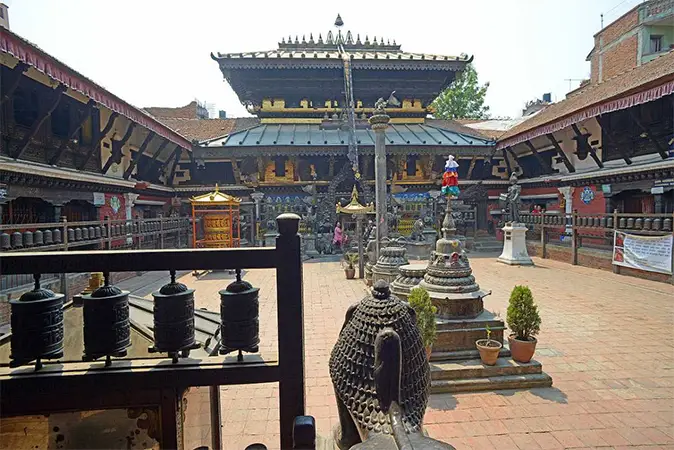
Kathmandu Durbar Square (also called Basantapur Durbar or Hanuman Dhoka) is a famous old palace area in the middle of Kathmandu city. It shows the history, art, and culture of Nepal.
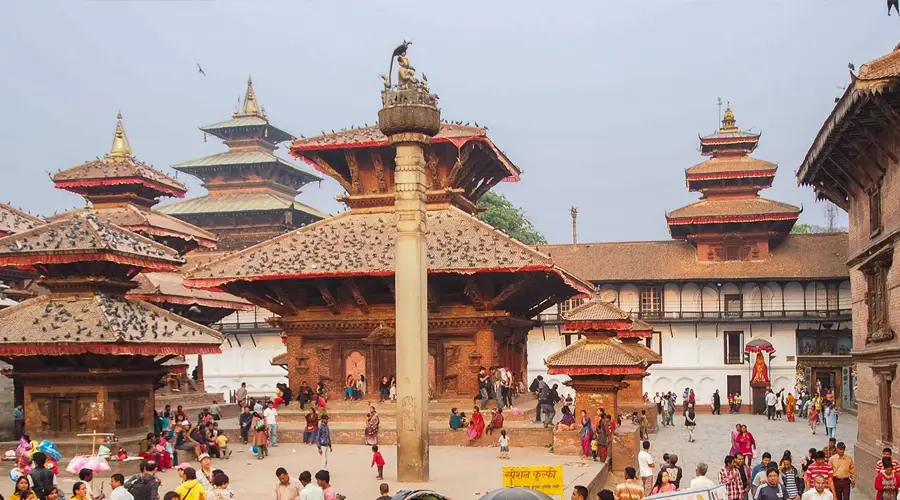
The area was first built during the Licchavi period (4th–8th century AD), and King Pratap Malla made it bigger in the 17th century. The square has many old palaces, courtyards, and temples — more than 50 temples in total. Because of this, people also call it “The Museum of Temples.”
You can also find handicraft shops near Gaddi Baithak, where you can buy beautiful handmade items.
Main Attraction of Kathmandu Durbar Square
Kathmandu Durbar Square, a UNESCO World Heritage Site, is the heart of Nepal’s ancient royal history, religious traditions, and exquisite Newari architecture. This historic palace complex showcases centuries-old temples, courtyards, statues, and museums that reflect the glory of the Malla and Shah dynasties.
Taleju Bhawani Temple – The Tallest Temple
Built in 1549 AD by King Mahendra Malla, Taleju Bhawani Temple is the tallest and most sacred temple in the square. Dedicated to the royal goddess Taleju, the temple opens to the public only once a year during the Dashain festival, making it one of the most exclusive spiritual sites in Kathmandu.
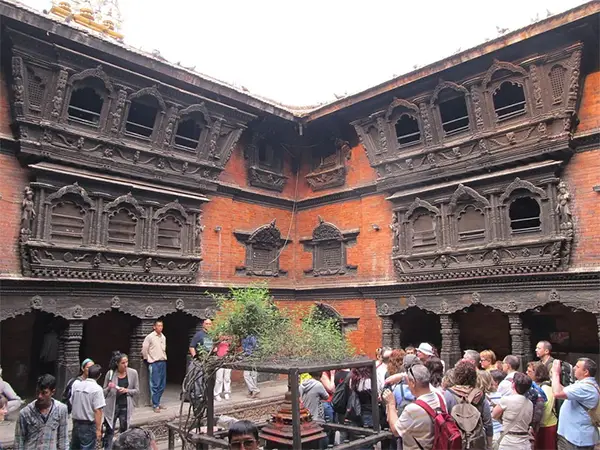
Kumari Ghar – The Living Goddess Temple
The Kumari Temple, constructed in the 17th century, is the residence of Nepal’s Living Goddess, Kumari. Famous for its intricate wooden carvings, visitors may witness the Kumari during special times and receive blessings, making this a unique cultural experience found nowhere else in the world.
Jagannath Temple – Artistic Wood Carvings
Dating back to the 16th century, Jagannath Temple is renowned for its detailed wood carvings, including symbolic and tantric motifs. It stands as a remarkable example of traditional Newari craftsmanship and temple art.
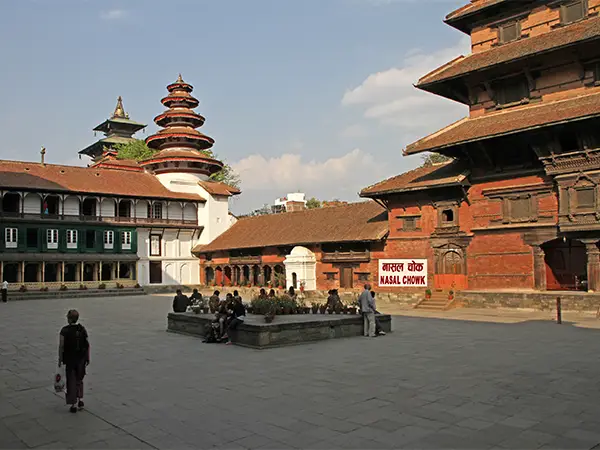
Nasal Chowk – The Royal Coronation Courtyard
Nasal Chowk is a magnificent royal courtyard built during the Malla period and later used by the Rana rulers. This historic courtyard served as the coronation site of Nepalese kings until 2001, making it a landmark of national importance.
Narsingha Statue – Avatar of Lord Vishnu
This powerful stone statue of Lord Narsingha, the man-lion incarnation of Vishnu, was erected in 1673 by King Pratap Malla. The statue symbolizes divine protection and reflects the king’s devotion and repentance toward Lord Vishnu.
Swet Bhairav – The Fierce Deity
Swet Bhairav is a massive and awe-inspiring statue of Bhairav, the fierce manifestation of Lord Shiva. The shrine opens to the public only during the Indra Jatra festival (August–September), attracting thousands of devotees and cultural travelers.
Shisha Baithak – Throne and Royal Legacy
Shisha Baithak is an open ceremonial area displaying the Malla throne and portraits of Shah dynasty kings, offering insight into Nepal’s royal heritage and political history.
Tribhuvan Museum – Memory of the Kings
Dedicated to King Tribhuvan, who led Nepal’s fight against Rana rule, this museum displays his bedroom, study, personal belongings, royal thrones, photographs, coins, and hunting memorabilia. It is a must-visit for understanding Nepal’s journey toward democracy.
Kal Bhairav – Power of Lord Shiva
One of the largest stone statues in Nepal, Kal Bhairav dates back to the 17th century. Representing Lord Shiva in his fierce form, this statue was historically used for oath-taking and symbolizes justice and divine power.