
Pashupatinath Temple is one of the most sacred Hindu temples in the world, located on the banks of the Bagmati River in Kathmandu, Nepal. It is a UNESCO World Heritage Site since 1979 and the most important temple of Lord Shiva in Nepal. The main temple has a gold – plated roof, silver doors, and a black stone Shiva Linga inside. The complex has hundreds of smaller shrines, statues, and ash-smeared holy men ( sadhus). The hindus are allowed to enter the main temple, but non- Hindus can view it form across the Bagmati River. Along the riverbank, you can also see Hindu cremation rituals, which are part of the cycle of life and death in Hindu belief.
As a sign of respect, leather items, shoes, belts, and cameras are not allowed, and photography is strictly prohibited inside the temple area. To enjoy the peaceful surroundings filled with chant,bells,and the smell of incense.
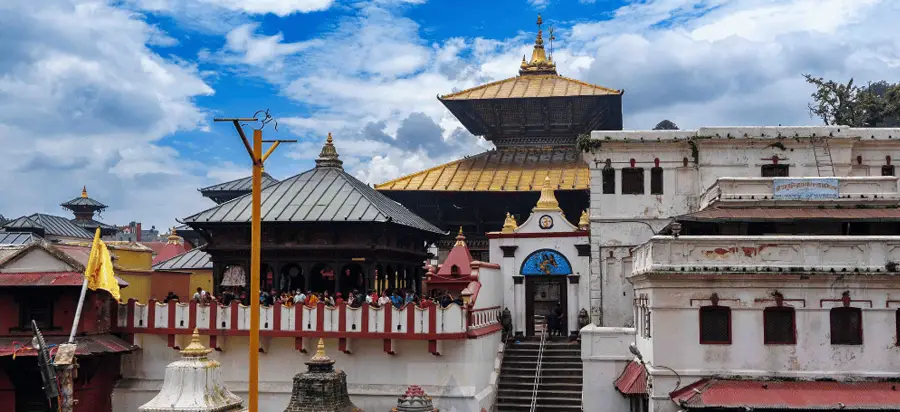
The grand Maha Shivaratri Festival, also known as “The Night of Lord Shiva,” is the biggest celebration held here. During this time, thousands of devotees, pilgrims, and sadhus from Nepal and India gather to worship Lord Shiva and witness sacred rituals.
Another major festival is Teej, celebrated by Hindu women every September. Women dressed in red sarees and green or yellow bead necklaces visit the temple to pray for their husbands’ health, happiness, and long life.
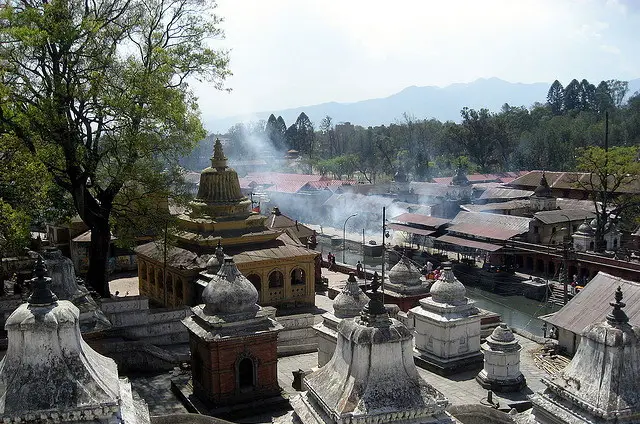
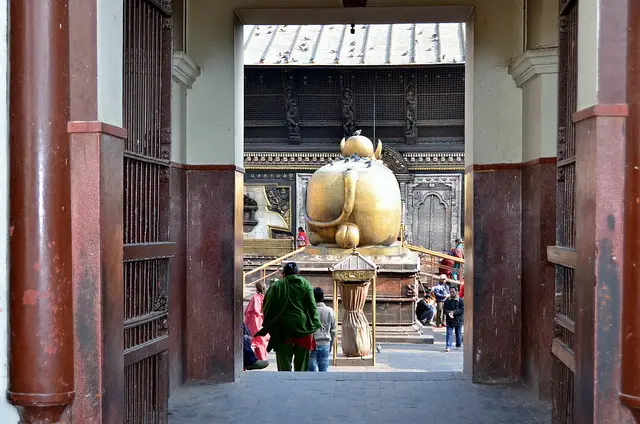
The temple is also very busy on Ekadashi, the 11th day of the lunar month, especially during Harishayani Ekadashi (June/July) and Haribodhini Ekadashi (October/November).
Surrounding the temple is the Slesh Mantak Forest, home to monkeys and sacred deer, believed to be connected to Lord Shiva’s divine form.
One of the most mesmerizing rituals is the Pashupati Bagmati Aarati, performed every evening on the riverbank. Devotees and tourists gather to watch this spiritual light and music ceremony, making it one of the best cultural experiences in Kathmandu.